Thursday, 16 August 2018

A Heart That Sees God. ~ Ganeida.

The next characteristic in our study of the Beatitudes is Purity of Heart.  The word for pure in Greek is katharos [clean, pure, unsoiled]the concept is brought forward from the Old Testament ideas of ritual cleanliness, such as handwashing, but I will give you 2 instances where the ritual symbol & moral integrity are united to show God's ultimate purpose.

Isaiah 52:11 from Youngs Literal Translation: Turn aside, turn aside, go out thence, The unclean touch not, go out from her midst, Be ye pure, who are bearing the weapons of Jehovah.


Psalm 24:3~4: [NASB] Who may ascend into the hill of the LORD? And who may stand in His holy place?  He who has clean hands and a pure heart, Who has not lifted up his soul to falsehood And has not sworn deceitfully.


The Book of Common Prayer in its General Confession puts it this way:

Most merciful God, 
we confess that we have sinned against you 
in thought, word, and deed, 
by what we have done, 
and by what we have left undone. 
We have not loved you with our whole heart; 
we have not loved our neighbors as ourselves. 


There are sins of omission as well as sins of commission.  Both have their root in the selfishness of the human heart.  It is not only our actions that reveal who we truly are & what we truly believe: our thoughts & words also betray us.


Once again Jesus is stressing it is not only our outward actions that matter.  Nor is it simply a matter of our will & our mind.   It is a matter of our core values, those things we hold closest to our heart.


We mentioned last week the discrepancy in the divorce rate between Christians & Jews.  The key difference we identified lay in our expectations.  Western culture teaches us to get what we can; Judaism stresses what we can give. Thus we have books like: The Art of The Deal, t.v shows like Survivor, quips like: You're the weakest link!  It takes real mindfulness to stop & reverse this sort of thinking that preys on the weak & seeks to manipulate even the strongest for it's own advantage.


The writer to the Hebrews stresses the importance of our heart position when he states:  Follow peace with all men, and holiness, without which no man shall see the Lord:[12:14]


There is a most delicate balancing act in this study.  On one hand Jesus is explicitly calling us to action.  On the other, none of it is possible without the grace of God.  It is God who initiates, God who enables, God who strengthens us when we falter.

"...continue to work out your salvation with fear and trembling. For it is God who works in you to will and to act on behalf of His good pleasure. [Philippians 2:13]

I remind you again holiness is not an abstract word, as it seems in English.  It simply means to be set apart for the purposes of God.  Our actions may not always be pure, moral, right, but we ourselves are holy because we have been set apart by God for His plans & purposes.  Part of becoming pure is to come into agreement with God by setting ourselves apart from worldly things that God might use us for Kingdom purposes.


It is not very popular any more, but the Christian life has always been a disciplined life.  We receive, as gifts freely given, salvation, grace, forgiveness, mercy & probably the most heartfelt & honest prayer is: "Help!" Help to be who God sees us as.  Help to do what God calls us to do.  Help to be what God calls us to be.  He has equipped us with everything we need through His Holy Spirit to walk the walk & mature in the Christian life but He only leads step by step.  We have to follow. If we simply sit on our laurels content to be saved but progressing no further then our relationship with God will never grow & deepen ~ & we will never see Him!


Now I don't think this means we won't see Him in Heaven simply because nothing impure can enter Heaven but we are warned in 1st Corinthians 3:13~ 15: [NLT] But on the judgment day, fire will reveal what kind of work each builder has done. The fire will show if a person's work has any value. If the work survives, that builder will receive a reward.  But if the work is burned up, the builder will suffer great loss. The builder will be saved, but like someone barely escaping through a wall of flames.


Everything Jesus was teaching was about building the Kingdom of God.  This is the work He left for us to do, whether it is casting out demons, healing the sick, preaching the word, practising mercy, giving alms, prayer....whatever it is, if it is done with wrong motives, with an impure heart, it will not benefit either us or the Kingdom of God & worse it will make it much more difficult for us to Hear & experience God.  It is absolutely essential that we agree with the Holy Spirit on this one for He will reveal to us the path in which we need to walk.


John tells us that God is Light ~ & in Him there is no darkness at all.  Just think about that for a moment. The Father is Light without darkness.  Jesus is light without darkness.  The Holy Spirit is light without darkness.  Are you beginning to see?  Do you understand?  God's Holy Spirit, His Light, His Truth, is in you but when you defile yourself with an impure heart you bring darkness into your Holy Place.  The darkness cannot extinguish the light but it can obscure your ability to see & understand the heart of God.


If you truly want to know God better & experience more of His presence then purity of heart is essential.  Nor is this primarily a moral position regarding sexuality, though that is included.  It covers all aspects of our relationships.  It calls us to radical servanthood toward others. It severs the tap root of our selfishness, our need to control & be in control.  It allows us to rest.  We have no hidden agendas. We attain the *single eye*, looking to Christ & Him alone.


Sometimes these concepts can be very difficult to grasp hold of & get right down into our spirit.  We understand with our intellect but we live in a world that doesn't abide by these precepts.  Many of us have never seen them lived out.  We don't really know what they look like in action so we struggle apply them.  This is where stories can sometimes help us, so I am going to tell you a story.  It is not my story & I don't have time to tell all of it but you can find it in The Friendly Persuasion by the Quaker short story writer Jessamyn West.  It is called Homer & the Lillies. It begins like this:


When Jess was 80 years old, somewhat gnarled, but still a very sturdy man, he came to know for a short time an asylum~boy as he was called, by the name of Homer Denham.


The story continues, describing the friendship between this 80 year old man & 12 year old boy as they fish, discuss whether mice can run backwards, & wonder @ the ways of the world. There is a catch though.  If you are a parent or a teacher you will know it: he push to always teach & correct, so  when Homer plucks 1/2 a dozen of Eliza's prized lily~of~the valleys Jess rebukes him ~ & everything he says is absolutely true: the flowers belong to Eliza; Homer has no right to touch them but...He didn't doubt he's done the right thing...still, doing the right thing shouldn't leave such an ache under the breastbone... Jess resolves to sort things with Homer but before He can do so a storm flattens the flowers & keeps Jess from doing what he had set his mind to do.  


When he can finally leave the house he picks some of the lilies for Homer & sets off, half expecting to meet Homer on the way, but he is too late.  Homer, never very strong, has died & the are flowers piled with all the others to soften, but not hide what the trestle had been set up to bear.


Jess is not only a deeply religious man, he is a philosophical man ~ & ruminating on what's happened he says to Eliza: I'm 80 years old.  All my life I've been trying one way or another to do people good.  Whether that was right or not, I don't know, but it comes over me now that I'm excused from all that.  I loved Homer, but I tried to do him good...the way I see it now, that was wrong, that was where I's led astray.  From now on, Eliza, I don't figure there's a thing asked of me but to love my fellow man."


As we go through these Beatitudes that comes closest to the heart of the matter.  They are teaching us how to love: to love God & to love our fellow man.

Sunday, 12 August 2018

Faith as Fruit ~ Rabqa

Today we are going to be looking at faith as fruit. Last time we saw how faith operates as one of the
nine spiritual gifts listed by Paul in 1Corinthians 12:7-11. Now we will see how faith functions as one of spiritual fruit that Paul listed in Galatians 5:22-23 N L T) 22 But the Holy Spirit produces this kind of fruit in our lives: love, joy, peace, patience, kindness, goodness, faithfulness, 23 gentleness, and self-control. There is no law against these things!

These virtues are characterised as fruit in contrast to works. Only the Holy Spirit can produce them, & not our own efforts. Another contrast is that, whereas the works of the flesh are plural, the fruit of the spirit is one & indivisible. When the Spirit controls the life of the believer, He produces all of these graces. The first three concern our attitude towards God, the second triad deals with social relationships, & the third group describe principals that guide a Christian’s conduct.


The seventh form of fruit listed is faith. Other versions of the Bible offer a variety of translation for this word, such as faithfulness (as does the N L T which I have read from) fidelity & trustfulness. But the Greek noun is pistis AS we saw in Faith versus sight, this is the basic word for faith throughout the New Testament.


Before we look at this particular form of fruit I think it will be helpful to consider the relationship between gifts & fruit in General.


Picture a Christmas tree & an apple tree side by side. I am talking of a Christmas tree on which presents are tied. It is a common practice in some places to tie gifts on to the tree instead of placing them under the tree. In this way, a Christmas tree bears gifts while an apple tree bears fruit.

In the case of the Christmas, a gift is both attached to it & removed from it by a single, brief act. The gift may be a garment & the tree may be a fir tree. There is no direct connection between the tree & the gift. The gift does not tell us anything about the nature of the tree which it is taken.


On the other hand there is a direct connection between an apple tree & the tree that bears it. The nature of the tree determines the nature of the fruit, both its kind & its quality. An apple tree can never bear oranges. A healthy tree will bear healthy fruit; an unhealthy tree will bear unhealthy fruit. Matthew 7:17-20 NLT. A good tree produces good fruit, and a bad tree produces bad fruit. 18 A good tree can’t produce bad fruit, and a bad tree can’t produce good fruit. 19 So every tree that does not produce good fruit is chopped down and thrown into the fire. 20 Yes, just as you can identify a tree by its fruit, so you can identify people by their actions.

Jesus teaches in verse 20 that we will know people by their fruit. Let me encourage you to examine your own fruit to see if it is good. I did that in my own life & discovered I was like an apple tree that sat all day saying “I am an apple tree” but I never produced any apples. Believers often carry outward signs of their Christianity is an attempt to share their faith. Bumper stickers on vehicles is a good example. These signs say that the drivers are Christians, but what kind of fruit do they bear in traffic? Are they obeying the speed limit? How do they react to other drivers especially those who cut them off in traffic? Thai actions are true signs of who they are. We may carry big Bibles, wear Christian jewellery & display large collections of Christian’s books in our homes. Yet still not producing any good fruit. We must be concerned about producing the fruit of the Holy Spirit, because the Holy Spirit is concerned with that . One of His main purposes is making us His home is to continually work His fruit in us & display it through us.


We must want to follow Christ’s pattern. The more we develop the attributes that characterised Jesus-love, concern & compassion-the more we will need the same gifts that He exercised in order to give practical expression to these attributes. The more fully we are equipped with these gifts, the greater our ability will be to glorify God our Father, just as Jesus did.


So we see that fruit is an expression of character. When all nine forms of spiritual fruit are present & fully developed, they represent the totality of Christian character, each form of fruit satisfying a specific need & each complementing the rest. Within this totality, the fruit of faith may be viewed from two aspects. These two aspects correspond to two different but related uses of the Greek word pistis. The first is trust; & the second is trustworthiness.


The first aspect of faith as a fruit is trust. The Jerusalem Bible translates pistis as trustfulness. Jesus could not emphasis enough that one of the requirements for all who would enter the kingdom of heaven is to become like a little child (Matthew 18:1-3; 19:13-14; Mark 10:13-15; Luke: 18:15-17.) There is probably no quality more distinctively characteristic of childhood than trustfulness. & yet, paradoxically, it is a quality that is seen at its perfection in the most mature men of God-men like Abraham, Moses, David & Paul. We may conclude, therefore, that the degree to which we cultivate trustfulness is a good measure of our spiritual maturity.


More fully, the fruit of faith- in this aspect of trustfulness-may be defined as a quite, steady unwavering trust in goodness, wisdom & faithfulness of God. No matter what trials or seeming disasters may be encountered, the person who has cultivated this form of fruit remains calm& restful in the midst of them all. He has an unshakable confidence that God is still in complete control of every situation & that, in & through all circumstances, God is working out His own purpose of blessing for each one of His children.


The outward expression of this kind of trust is stability. We see that David beautifully pictured this
Psalm 125:1 Those who trust in the LORD are as secure as Mount Zion; they will not be defeated but will endure forever.

God is for us; He is on our side (Psalm 118:6). The devil has one position; he is against us. But God is over us, for us & He surrounds us. So like Mount Zion we should not be moved, because God is all around us.


All of earths mountains may tremble & shake & even be totally removed, all except one Mount Zion can never be moved. God has chosen it for His own dwelling place, & it alone will abide forever.

When the believer has learnt to trust, others around them may give way to panic & confusion, but he remains calm & secure. His foundation is in the holy mountains ( Psalm 87:1).

Know with every part of your being that you are safe in the Lords hands; this the key to the kind of trust; Be committed to Him.

God will answer our prayers in His timing, it isn’t always instant; recently I had a bad cold so I prayed for healing using my favourite Scriptures excepting at the worse to have to wait three to four days as that is what I have come to expect from Him if I am sick, but no this time it took about ten days; God is always faithful & just, He will remain true to His promises. Our ability to receive is the influence of prayers offered on our behalf, but a large measure is due to attitude of trust.

In Psalm 37:5 David said: Commit everything you do to the LORD. Trust him, and he will help you.
If we delight ourselves in the Lord, He will give us the desires of our hearts. I have learnt that letting God give me something is so much better than trying to get it for myself. Most of us struggle greatly with our lives trying to make things happen that only God can do. He wants us to seek Him, & He promises that He will add the things we desire if & when the time is right.


The act of commitment leads to the attitude of trust. David assured us that as long as we
continue in this attitude of trust God is working out the thing we have committed to Him (in my case it was healing). It is the continual attitude of trust on our part that keeps the channel open through which God is able to intervene in our lives & work out what needs to be done. But if we abandon our trust, we then close the door & hinder the completion of what God has begun to do for us.

Committing a matter to the Lord is like taking cash to the bank & depositing it into your account. Once you have received the teller’s receipt for your deposit, you no longer need to be concerned about the safety of your money. That is now the banks responsibility, not yours. It is so ironic that some people have no difficulity trusting the bank to take care of the money they have desposited find it much harder to trust God concerning some vital personal matter that they have committed to Him.

The example of the bank deposit illustrates one important factor in making a successful commitment. When you walk out of the bank, you carry an official receipt, showing the date, the
place & the amount you deposited. There are no uncertainties. In the same way, you need to be equally specific concerning those things you commit to God. You need to know without a shadow of doubt, both what you have committed & when & where the commitment was made. You also need the Holy Spirit’s official receipt, acknowledging that God has accepted your commitment.


Trust is like all forms of fruit: It needs to be cultivated, & it passes through various stages of development before it reaches full maturity. The development of trust is well illustrated by the words of David in Psalm 62:2 He alone is my rock and my salvation, my fortress where I will never be shaken. Now in verse 6 he said I shall not be shaken. Between verse 2& verse 6, David progresses from not being greatly shaken to not being shaken at all.


We need to be honest with ourselves as was David. Before our trust has come to maturity, the beat that we can say is “I will not be greatly shaken!” to not been shaken at all. At this stage trouble & opposition will shake us, but they will not overcome us. However, if we continue to cultivate our trust, we will come to the stage where we can say “I will not be shaken at all!” Nothing will be able to shake us any longer-much less overcome us.


Trust of this kind is in the realm of the spirit rather than the emotions. We may turn once more to the personal testimony of David In Psalm 56:3 he said: But when I am afraid, I will put my trust in you. When you are tempted to be afraid, choose to trust the Lord as an act of your will, not as response to your emotions. Practice a determined praise filled refusal to be afraid.


Faith is a conscious choice to act on what God says is true, not some passive response of the Christian to his circumstances. Like everything else, faith requires to grow & become strong. Faith comes from Gods Word illumined by the Holy Spirit & released acts of obedience. Faith requires a singleness of commitment that draws us from doubt & wavering.


Trust, in its full maturity, is beautiful shown in the words of Paul in 2 Timothy 1:12. That is why I am suffering here in prison. But I am not ashamed of it, for I know the one in whom I trust, and I am sure that he is able to guard what I have entrusted to him[a] until the day of his return.

By worldly standards, Paul was a failure. Some of his most influential friends & supporters had turned against him. Of all of his close co-workers, only Luke remained with him. One of his co-workers Demas had actually abandoned him & turned back to the world. Paul was weak & aged in chains in a Roman prison, waiting for an unjust trial & execution at the hands of a cruel depraved despot. But his words rang with serene, unshakable confidence in 2 Timothy 4:8 And now the prize awaits me—the crown of righteousness, which the Lord, the righteous Judge, will give me on the day of his return. And the prize is not just for me but for all who eagerly look forward to his appearing.

AS it was with David, so it was with Paul: Trust was the outcome of an act of commitment. His commitment is expressed in his own words: He is able to guard what I have entrusted to Him. (2 Timothy 1:12). Trusting was the result of entrusting. Years previously, Paul had made an irrevocable commitment of himself to Christ. Out of this, subsequent trials & sufferings gradually brought forth an ever deepening trust that had come to its full fruition in a Roman dungeon, its radiance all the brighter in contrast to its gloomy setting.


Now we will look at the second part of faith as a fruit; trustworthiness. Linguistically, trustworthiness is in fact, the original meaning of pistis. In Arndt & Gingrich’s standard lexicon of the New Testament Greek, the specific definition given of pistis is faithfulness, reliability, if we go back to the Old Testament; the same meaning applies to the Hebrew word for faith-emunah. Its primary meaning is faithfulness; its secondary meaning is faith. The verb from which it is derived gives us the word amen-so be it, let it be confirmed. The root meaning is firm reliable.


Both meanings alike-trust & trustworthiness-converge in the person & nature of God. If we view
faith as trust, its only ultimate basis is God’s trustworthiness. If we view faith as trustworthiness, it is only through our trust that the Holy Spirit is able to impart God’s trustworthiness to us. God is both the beginning & the end of faith. His trustworthiness is the only basis for our trust; our trust in Him reproduces His trustworthiness in us.


Probably no attribute of God is more persistently emphasised throughout the Scriptures than His trustworthiness. In the Old Testament, there is one special Hebrew word reserved for the attribute: chesed. In the English versions of the Bible, this word is variously translated goodness, kindness loving kindness, mercy & so on. However, not one of these translations fully expresses its meaning.

There are two distinctive features of God’s chesed, or trustworthiness. First, it is the expression of God’s free unmerited grace. It goes beyond anything that man can ever deserve or demand as right. Second it is always based on a covenant that God voluntarily enters into. We may combine these features by saying that chesed is God’s trustworthiness in fulfilling His covenant
commitments, which beyond anything that we can deserve or demand.


So we find a close connection between the following three important Hebrew concepts: emunah, faith or faithfulness; chesed, God’s trustworthiness; & berith, which means a covenant. These three Hebrew words form a recurrent theme in a series of verses in Psalm 89:24 & my faithfulness [emunach] & my loving kindness [chesed] will be with him.

My loving kindness [chesed] I will keep for him forever, & my covenant [berith] shall be confirmed. Verse 28 & in verses 33-34 But I will not break off my loving kindness [chesed] from him, nor deal falsely in My faithfulness [emunah]. My covenant [berith] I will not violate, nor will I alter the utterance of my lips.


The last verse brings out a special relationship between God’s trustworthiness & the words of His mouth. There are two things God will never do: break His covenant or go back on what He has said. God’s trustworthiness, imparted by the Holy Spirit, will reproduce the same characteristic in us, It will make us people of unfailing integrity & honest.


In Psalm 15:1 David asked two questions. Who may worship in your sanctuary, LORD? Who may enter your presence on your holy hill? In the verse that follow he answers his own questions by listing eleven characteristics that mark a person of integrity. The ninth requirement is listed at the end of verse four. Those who despise flagrant sinners, and honour the faithful followers of the LORD, and keep their promises even when it hurts. God expects the believer to be true to His commitments, even at the cost of personal sacrifice. The world has its own way of saying this: “A man is as good as his word.” A Christian who does not honour his word & keep his commitments has not yet developed the fruit of trustworthiness.


In 2 Timothy 3:1-5 You should know this, Timothy, that in the last days there will be very difficult times. 2 For people will love only themselves and their money. They will be boastful and proud, scoffing at God, disobedient to their parents, and ungrateful. They will consider nothing sacred. 3 They will be unloving and unforgiving; they will slander others and have no self-control. They will be cruel and hate what is good. 4 They will betray their friends, be reckless, be puffed up with pride, and love pleasure rather than God. 5 They will act religious, but they will reject the power that could make them godly. Stay away from people like that!

Do not be deceived by jargon or religiosity. Look for true spiritual power & godliness in others.

One with spiritual wisdom possesses spiritual perception & a wise value system. He realises that any theological quarrelling is unproductive & refuses to be drawn into it rather, he learns gently to persuade others to godliness, not being easily deceived by feigned godly behaviour. He also recognises the human tendency to avoid the demands of truth & to listen, rather, to do what they want to hear.


Today we have seen spiritual fruits differ from spiritual gifts in two main ways. First, a spiritual gift can be both imparted & received by a single, brief transaction; fruit must be cultivated & by a continuing process that requires time, skill & labour. Second, gifts are not directly related to the character of those who exercise them; fruit is an expression of character. Ideally, fruit & gifts should balance one another in a combination that glorifies God.


As a form of fruit, faith may be understood in two distinct but related ways: as trust & as trustworthiness.


Stability is a manifestation of trust, & it increases as trust matures. Stability requires an initial act of commitment. Entrusting leads to trusting.


Our trust is based on God’s trustworthiness, or chesed. God demonstrates His trustworthiness towards us by fulfilling His covenant commitments, which go beyond anything we deserve or demand. In turn, God’s trustworthiness makes us the kind of people who are willing & able to enter into & maintain covenant commitments, both with God & with one another.

Acknowledgements Derek Prince

Thursday, 9 August 2018

The Quality of Mercy. ~ Ganeida

Today we are going to look @ Matthew 5 verse 7: Blessed are the merciful, for they shall
obtain mercy.

Mercy is an attribute of one's character.  In Greek the word used is eleeō ~  defined as:

  1. to have mercy on
  2. to help one afflicted or seeking aid
  3. to help the afflicted, to bring help to the wretched
  4. to experience mercy
And that seems relatively simple.  Many of our Good Deeds would fall under the heading of Being Merciful.  Mercy was embedded in Jewish Law & Tradition & as such was passed down into the Christian tradition but the one thing we know about Jesus & the Law is that His interpretation of it was radical, life~changing & far more about the heart that it was about outward behaviour.   

It is not then surprising to find there are 4 different Hebrew words & 6 Greek ones that are variously translated as Compassion/mercy.  The Hebrew word that interests us is: râcham.  It means to love deeply.  I believe this is the underlying principle Jesus is addressing because it is perfectly possible to act mercifully but in such a way people are repulsed  & if you think that is not true consider our English word *charity*.  Charity was the word typically translated from agape ~ the God sort of love ~ but it has come to mean a cold, heartless action motivated by duty rather than love & has almost completely fallen out of modern usage.

It is perfectly possible to do the right thing with the wrong motive  but the defining characteristic of the Kingdom of God is love, because God Himself is love & so we must never assume Jesus words are merely addressing our actions.  God is far more interested in our character development than we are.

What's more, it is an uniquely God characteristic & so when we practice mercy we are demonstrating to the world that we are indeed God's children.  I say this because, if you have studied any history at all you know that William Barclay got it right: 
A Christ~less world is a callous world, and mercy was never a characteristic of pagan life.

This quality of mercy is best understood if we go to 1st Corinthians 13 & look at the characteristics that define love, as Paul understands it: kindness, patience, civility, humility...this is love in action.  This is how love behaves towards the stranger, the immigrant, the disabled, the young.  It is also how love behaves towards those who wrong us, gossip about us, slander us, treat us with contempt, steal from us, abuse us.  The Kingdom dynamics are radical.

Jesus said: "If you do good to those who do good to you, what credit is that to you? For even sinners do the same." [Luke 6:33]  Kingdom people are meant to be radically different to those around them.  So much so that the world sits up & takes notice. Our whole idea of evangelism is skerwiff.  Before people will listen to what we have to say they will look @ who we are.  That is fair & reasonable.  Until the evidence of the Living God shows in our lives  all others see is the hypocrisy in our lives.  If we are no different to the world then saying things like: My life is my witness, is both meaningless & dishonest.  

Now, in the natural it is impossible to be merciful in the way Jesus means.  Our flesh screams for vengeance.  Here is where so many Christians miss it.  Christianity is not simply a matter of salvation ~ though to listen to many Christians you could not be blamed for thinking that.  Salvation is only the beginning.  Salvation places the Holy Spirit within you & the Holy Spirit of the Living God is where all your power to live & act as Christ comes from! Salvation begins the process of a radically transformed life & it will produce fruit in you!  

According to Galatians 5 :22~23 ... the fruit of the Spirit is love, joy, peace, patience, kindness, goodness, faithfulness, gentleness, self-control; against such things there is no law.

Yet again we see character formation producing fruit in our lives, fruit that is predominantly characterised by love.  The 2nd fruit mentioned is joy.  What does Jesus say: Blessed are the merciful ~ happy, joyful.... but biblically joy is tied to a person: the joy of the Lord is our strength [Nehemiah 8:10] for For the kingdom of God is not a matter of eating and drinking, but of righteousness, peace and joy in the Holy Spirit,[ Romans 14:17]

Now I will show you something in the Greek.  Joy is chara but the word most closely related to it is charis ~ grace! Mercy & joy are linked to God's grace because grace is God's unmerited favour towards us.  To the depth we understand God's grace to us, we understand His mercy toward us. Jesus says of that Mary who anointed His feet: "For this reason I say to you, her sins, which are many, have been forgiven, for she loved much; but he who is forgiven little, loves little." [Luke 7:47] 

The thing is not that Mary's sin was greater or lesser than our own.  Rather she understood the enormity of her transgression & her response was accordingly extravagant. When we fail to grasp the enormity of our own sin it has repercussions.  Firstly it tends to make us see ourselves in a better light than others causing us to be judgmental & self~righteous.  There is no mercy flowing from judgmental self~righteousness.   When we understand how much mercy has been extended to us we are better able to extend mercy to others. The irony is that the better we understand the extent of our own sin & the grace & mercy of God towards us the more we are finally able to let go of our own guilt, our own self~condemnation & receive the free gift of God's mercy toward us.

In the way of things there are going to be 3 main groups of people who require our mercy: family, believers & unbelievers.  Of these 3 groups it is often other believers we struggle with most because they should know better.  They should behave better.  This is why Jesus issued His warning about not judging.[Matthew 7:1]  In context He is still on the mount expounding upon the Beatitudes & this command is about extending mercy to those who haven't quite got it yet.

When it comes to unbelievers it can be problematic.  They do not have the same sort of restraints on their language & behaviour that Christians generally employ but there is a verse in Romans [2:4] that highlights the importance of our response , for as followers of Christ our response should not only be Christ~like but may be the defining response that brings someone into the kingdom: 
Or do you think lightly of the riches of His kindness and tolerance and patience, not knowing that the kindness of God leads you to repentance?

Mercy is serious business.  It never condones sin but it responds with grace & kindness because the deepest need of the human heart is to be accepted & loved.  That need is never greater or more needed than by those trapped in the net of their own sin.

Friday, 27 July 2018

Those who mourn... ~ Ganeida.

The promise of the Kingdom is not for those who merely indulge in wishful thinking or religious talk. It demands *forcefulness* ~ an attitude of fixed determination that presses ahead regardless of every kind of difficulty or  discouragement. Derek Prince.

Each time we study some aspect of the Christian life it usually means we need to remind ourselves of something else we have already learned.  So it is with the beatitudes. So this morning I want to start by reminding you that you are a three~fold being: you are a spirit that lives in a body & has a soul [mind, will, emotion].  We have talked about Christians being the Temple of God with our body as the outer court, our soul [mind & emotions] as the inner court & the Spirit of God within us as our Holy of Holies.  We have discussed numerous times how true belief, true worship, is more than just intellectual agreement with the  proposition of salvation.  This is also true of the Kingdom of God & Jesus recognises this in the way He presents the beatitudes to us.

He begins by pointing out that the poor in Spirit are blessed but this acknowledgement of our lack is only our beginning point.  It is, in essence, an intellectual agreement with God's assessment of our  spiritual state.  We lack.  We pointed out that there are 2 responses to recognising our lack: either we agree & do nothing about it or we agree & respond.  The 3rd position is that of the Laodicean church which says: I am rich; I lack nothing. We always want to come into agreement with what God says because that is when we free up the Holy Spirit to make deep changes in our lives rather than resisting His work.


Now many churches teach that our feelings are irrelevant scriptually but this is not true.  Scripture always teaches balance.  We are to believe the Word, but our response to that word should involve both our intellect & our emotions.  Being poor in Spirit is how we think about our condition.  Mourning is how we feel about it.  At some point our intellect has to move to a heart position.


The Holy Spirit is our comforter ~ which, in essence, suggests that we are in need of comfort.  Now I suggest to you we misunderstand the sort of comfort the Holy Spirit ministers because we view scripture around ourselves rather than from a kingdom perspective.  It is very nice to think that the Holy Spirit comforts us when we are sad ~ & I thank God that He does!  However that is not the Holy Spirit's primary role as comforter.  He is the Spirit of Truth.  He is the Helper, the Paraclete.  His first & primary responsibility is to convict the world of sin & once convicted, lead us into all Truth. This is where  & how He comforts us.  He is the Great Encourager.  As we seek to live out our Christian walk it is the Holy Spirit who comes along side to encourage & comfort us in our walk because it is not always an easy walk.  Our flesh usually wants to do something else entirely.

As Jesus pointed out in the garden: "Keep watching and praying that you may not enter into temptation; the spirit is willing, but the flesh is weak." [Matthew 26:41] Our flesh was made for this world but we are to rule over our flesh.  It is not to dominate our spirit~man who is listening to the Holy Spirit.  

As we have seen so often when studying Paul's writings, he uses many military terms.  Paraclete is another military term.  We all know how the Romans used the *turtle* formation when fighting, locking their shields together & forming an impenetrable wall.  However when they fought one on one they always fought back to back so that their *blind* side was always protected.  The *protector* was called the Paraclete.  The Holy Spirit *has our back* & that is also His comfort to us.


Satan may accuse us before the throne of heaven both day & night but we have another advocate, the Lord Jesus Christ ,who ensures we are never left alone to fight these battles.  Whatever we are facing, wherever we are in our spiritual walk, the Holy Spirit is right there, down in the trenches with us, back to back, encouraging us to believe God's Truth, stand on God' Word & continue to work out our salvation rather than resting on our laurels.


We have spoken of the tensions implicit in scripture.  We find another when we discuss spiritual mourning because it is not designed to lead us into despair.  It is not meant to lead us into spiritual extremes such as the Medeivalists did of crawling to Canterbury on their knees, sitting atop poles in the desert or wearing horsehair shirts next to the skin.  Rather we are to ...work out [y]our salvation with fear and trembling; for it is God who is at work in you, both to will and to work for His good pleasure. [Philippians 2:12~13] We are to put our trust in God who will bring forth the result He desires but we are to co~operate by working with the Holy Spirit!  Please note: it is God who gives us the will & the work.  He is our source but Christians who are not plugged in to their source do no have the ability to run their race.


Paul calls this * godly sorrow*. I will give it to you in the NLT which is easier to understand than some of the other translations: For the kind of sorrow God wants us to experience leads us away from sin and results in salvation. There's no regret for that kind of sorrow. But worldly sorrow, which lacks repentance, results in spiritual death. [2 Corinthians 7:10]


Paul goes on to discuss the results of godly sorrow. Just see what this godly sorrow produced in you! Such earnestness, such concern to clear yourselves, such indignation, such alarm, such longing to see me, such zeal, and such a readiness to punish wrong. You showed that you have done everything necessary to make things right. [2 Corinthians 7:11]


This is why I have been at such pains to continually point out that intellectual agreement does not lead to salvation. When the heart is genuinely changed there will be a changed lifestyle as well.  That is not to say that we will never sin or be plagued with a habit we find difficult to break.  It does mean that our conscience will be bothered & we will do our very best to aligned ourselves with the will of God.  It will produce spiritual mourning & spiritual mourning produces fruit!


Paul is not speaking to unbelievers here so he is not referring to initial salvation.  He is speaking to a spirit filled, charismatic, tongues, signs & wonders church that needs to *work out its salvation with fear & trembling.* Godly sorrow is a motivator. It seeks to make us hungry for the things of God. Pride, something the Corinthian church knew about also, says we don't need anything.  We're rich.  We understand spiritual things but Paul says: For now we see in a mirror dimly, but then face to face; now I know in part, but then I will know fully just as I also have been fully known. [1Corinthians 13:12]  When it comes to spiritual matters we are never going to reach a summit of perfection when there is no more to aspire to, no more to work toward, no more to know!  Spiritual mourning helps us find wholeheartedness ~ that place where we actually desire to love God first, love God only, love God with everything that is in us.  This godly sorrow stirs up spiritual discontent.  We can be satisfied with nothing less than all God has for us & we will radically change our lifestyle &  our priorities to see God bring that about in our lives.


I will just mention another aspect of mourning here that grows out of intimacy with God & seeking after Him with all your heart & that is the prayer of intercession.  There are certain things that are very close to Jesus heart: Justice, Mercy, the orphaned & dispossessed.  When we pray in these areas we are touching the very heart of God. 


Micah 6:8 says: He has told you, O man, what is good; And what does the LORD require of you But to do justice, to love kindness, And to walk humbly with your God?


These are areas where the Holy Spirit may bring us into deep travail as we pray out the will of God & Kingdom principles for a fallen world for God will share His heart  for all the lost sheep & that can bring us into a place of deep mourning where we desire to see Kingdom principles established but it is a blessed place for it is the place where God shares His heart.


Now many people pray for these things without experiencing true mourning & the reason for that is quite simple.  Often we pray for things because we know we ought.  We know abortion is wrong.  We know injustice is wrong.  We know homosexuality is wrong.  So we pray about these things but praying about is not the same as letting the Holy Spirit lead you in prayer on these issues. 


When the Holy Spirit leads He prays out the heart of God:

My frame was not hidden from You when I was made in secret, when I was woven together in the depths of the earth.  Our eyes saw my unformed body; all my days were written in Your book and ordained for me before one of them came to be. Psalm 139:14~15

This is true for every single human being. As Jesus blood was shed for each of us individually, so each human, is formed in the image of God by His will & His loving hand.  We begin to see our world as God sees it & the Holy Spirit sheds the love of God abroad in our hearts.


Thus we see a progression.  We begin by seeing our spiritual lack.  Lots of other things in our lives are more important than God & this creates a great gulf between all that is available to us in Christ & what we actually experience.  We then have a choice.  We can say, I have all of God I need & continue on our merry way.  We can say, I lack all of God that is available to me but do nothing.  OR, we can acknowledge our lack & cry out to God to help us in our weakness.  And God is so  good He does exactly that.  The Holy Spirit begins to work in us to produce mourning, that godly sorrow that motivates us to go harder after God, seek Him more intimately, press in harder.  This is not an exercise for wooses or sissies, or for the faint of heart.  As Derek Prince says it requires an attitude of fixed determination.  


The good news is we are not left to our own devices to achieve any of this. James tells us we don't have because we don't ask ~ & that is true no matter whether we are asking for healing, finances or spiritual mourning. All we need to do is ask.  And God is pleased to grant this request above all others because we were created for relationship with Him from the foundation of the world.


Wednesday, 18 July 2018

Faith as a Gift ~ Rabqa

Faith, as depicted in the New Testament, has various aspects. Although it’s essential nature always
agrees with the definition given in Hebrews 11:1 Now faith is the [a]substance of things hoped for, the [b]evidence of things not seen. (NKJ), this nature express itself in a variety of distinct but related forms.


The three main ways of faith maybe defined as the following:
1. Faith as a gift.
2. Faith as a fruit
3. 3. Faith to live by.
The third form of faith is a continuing personal relationship that links the believer directly to God & affects every area of our life. It provides the motivation, the direction & the power for everything we do. It is, in fact both the sole & the sufficient ground for righteousness living. For this reason I call it
faith to live by. We will now look at the nature of faith as a gift.

I Corinthians 12:7-11 NLT A spiritual gift is given to each of us so we can help each other. 8 To one person the Spirit gives the ability to give wise advice[a]; to another the same Spirit gives a message of special knowledge.[b] 9 The same Spirit gives great faith to another, and to someone else the one Spirit gives the gift of healing. 10 He gives one person the power to perform miracles, and another the ability to prophesy. He gives someone else the ability to discern whether a message is from the Spirit of God or from another spirit. Still another person is given the ability to speak in unknown languages,[c] while another is given the ability to interpret what is being said. 11 It is the one and only Spirit who distributes all these gifts. He alone decides which gift each person should have.

In verse 4-11 we learn that every believer-& that includes both you & me-has been given at least one spiritual gift, & usually more than one. If you do not know what your spirituals gifts are, pray for the Holy Spirit to reveal them to you. Inquire at your church about taking a class on spiritual gifts, or on the other hand seek information about a spiritual gifts test you can take. These tests often help people understand themselves & give them a release to begin functioning in their gifts. Thank the Holy Spirit for giving you the gifts He has chosen, & ask Him for wisdom in using them.


The Holy Spirit is dwelling in a believer, is invisible. But by these gifts operating through a believer, the presence of the Holy Spirit is made manifest to human senses. In each case, the result is produced in the realm of the senses; they can be seen, heard or felt.


Since the gifts are given by the Holy Spirit & not the believers own personality, all of them are supernatural in character. In every case, the results that they produce are on higher level than the believer could ever achieve by his own ability. Each result is possible only through a direct supernatural operation of the Holy Spirit. By these gifts & through the believer the Holy Spirit comes forth out of the invisible spiritual realm &makes impact upon the physical world of space & time.


Paul established two important practical points concerning these gifts. First they are distributed solely at the discretion of the Holy Spirit, according to His sovereign purpose for each believer’s ministry. Humans will or achievement is not the basis for receiving these spiritual gifts.
Second they are given to each one for the common good V7), for a useful practical purpose. AS Bob Munford said “The gifts of the Spirit are tools not toys.”


It has often been pointed out that these nine gifts fall naturally into three groups of three:

1. The gifts of utterance. These are gifts that operate through the believers vocal organs. They include prophecy, tongues & the interpretation of tongues.

2. The gifts of revelation. These are gifts that impart spiritual illumination. They include the word of wisdom, the word of knowledge & the discerning of spirit.

3. The gifts of power. These are gifts that demonstrate Gods supernatural power in the physical realm. They include faith, the gifts of healing & the working of miracles.

The gift of faith, which we will now look at, is the first of the three gifts of power. It is distinguished from the other forms of faith by the fact that it is a sovereign, supernatural manifestation of the Holy Spirit working through the believer. The two key words are sovereign & supernatural.


In Matthew 21 & Mark 11, we read that Jesus on His way to Jerusalem with His disciples came to a fig tree by the wayside. Jesus was seeking fruit. When He found that the tree contained only leaves, but no fruit, He pronounced a curse upon it, saying, May no one ever eat fruit from you again Mark 11:14 The next day as Jesus & His disciples passed the same tree, the disciple were astonished to see that within twenty four hours it had withered up from the roots up. Behold Peter said the fig tree which you cursed has withered (V21).


To Peters comment Jesus replied, Have faith in God (V22). This is how it has been translated in English. However, what Jesus actually said, in its most literal form, was, “Have God’s faith.” This statement highlights the special kind of faith we are speaking of here that is faith as a gift. Faith has its origin not in man, but in God. It is an aspect of God’s own eternal nature. Through the gift
of faith, the Holy Spirit imparts a portion of God’s own faith, directly & supernaturally, to the believer. This is faith on a divine level, as high mere human faith as heaven is above earth.


In saying. “Have God’s faith” Jesus challenged His disciples to receive & exercise this kind of faith, just as He Himself has done. He went on to tell them that with faith of this kind they would not only be able to do what they had seen Him do to the fig tree, but also they would be able to move a mountain by simply speaking Matthew 21:21 Then Jesus told them, “I tell you the truth, if you have faith and don’t doubt, you can do things like this and much more. You can even say to this mountain, ‘May you be lifted up and thrown into the sea,’ and it will happen.

Jesus was not merely speaking to the disciples when He said, “If you have faith,” for we see in Mark 11:23 that He used the word whoever, extending His promise to all believers. I tell you the truth, you can say to this mountain, ‘May you be lifted up and thrown into the sea,’ and it will happen. But you must really believe it will happen and have no doubt in your heart.


Jesus set no limit to the scope of this kind of faith. The phrases He used are all inclusive: “Whosoever says...what he says...shall be granted to him.” There is no restriction concerning the person who speaks or the words spoken. All that matters is the nature of the faith; it must be God’s own faith.

In Luke 8:22-25, we see that, as Jesus & His disciples were crossing the Sea of Galilee in a boat, they were suddenly overtaken by an unnaturally violent storm. The disciples woke Jesus who was asleep in the stern, saying, Master, Master we are perishing!” (Luke 8:24). The biblical record
continues, “& being aroused, He rebuked the wind & the surging waves, & they stopped, & it became calm” (Verse 24)


Obviously, the faith that Jesus exercised here was not on the human level. Normally, the winds & waters are not under mans control. But the moment of need, Jesus received a special impartation of His Father’s own faith. Then, by a word spoken with that faith, He accomplished what man would consider impossible: the instantaneous calming of the storm.


When the danger had passed, Jesus turned to His disciples & said “Where is your faith?” (verse25) In other words He asked, “Why couldn’t you have done that? Why did I have to do it?” He implied that it would have been just as easy for them to have calmed the storm as it had been for Him-If they had exercised the right kind of faith. But the moment of crisis the impact of the storm on the disciples’ senses had opened the way for fear to enter their hearts, thus excluding faith. Jesus on the other hand, had opened His heart to the Father & received from Him the supernatural gift of faith needed to deal with the storm.


Later Jesus confronted a storm of a different kind: a boy rolling around on the ground in an epileptic seizure & an agonised father imploring help. Jesus dealt with this storm as he had dealt with the storm on the Sea of Galilee. He spoke an authoritative word of faith that drove the evil spirit out of the boy. When the disciples asked Him why they had not been able to do this, He told them plainly, You don’t have enough faith. Matthew 17:20). Then He went on to say if you had faith even as small as a mustard seed, you could say to this mountain, ‘Move from here to there,’ and it would move. Nothing would be impossible.[a]”

Here Jesus used a mustard seed as a measure of quantity. In Matthew 13:32, we are told that a mustard seed is the smallest of all seeds, but it becomes the largest of garden plants; it grows into a tree, and birds come and make nests in its branches.”

In other words, Jesus was telling us that it is not the quantity of the fruit that matters, but the quality. If a person has the right kind of faith in even the amount of a mustard seed, it is enough to move a mountain!


Near the climax of His earthly ministry, Jesus once more demonstrated the power of words spoken with the right kind of faith. Outside of the tomb of Lazarus, He cried out with a loud voice “Lazarus come forth” (John 11:43). This brief command, energised by supernatural faith, caused a man who was both dead & buried to come walking out of his tomb, alive & well.


The original pattern for supernatural faith is found in the act of creation itself. It was by faith in His own word that God brought the universe into being. Psalm 33:6, 9 The LORD merely spoke, and the heavens were created. He breathed the word, and all the stars were born. For when he spoke, the world began! It appeared at his command.

In verse 6 we see that the heavens or universe did not evolve but were created by the Word of God. No scientific fact supports the evolutionary model of origins.


When the gift of faith is in operation, a man becomes for a time the channel of God’s own faith. The person who speaks is no longer important, but only the faith that is expressed. If it is God’s own faith at work, it is equally effective whether the words are spoken through God’s mouth or are uttered by the Holy Spirit through the mouth of a human believer. As long as a believer operated with this divine faith, his words are just as affected as if God had spoken them. It is the faith that matters not the person.

So we can see from what we have examined supernatural faith is expressed through a spoken word. By a spoken word Jesus caused the fig tree to wither. By a spoken word he calmed the sea, cast the evil spirit out of the epileptic boy, & called Lazarus out of the tomb. In Mark 11:23 Jesus said this about any word spoken in faith. “Whoever says...what he says...shall be granted him”.

Sometimes a spoken word in prayer becomes the channel for the gift of faith. In James 5:15 we are told that “the prayer of faith shall save [or restore] the sick (KJV). There is no room left for doubt about the effect of a prayer of faith. Its results are guaranteed. Prayer with God-given faith is irresistible. Neither sickness nor any othercondition that is contrary to God’s will can stand against it.


For example of someone who prayed “the prayer of faith, James referred to Elijah. By his prayer, Elijah withheld rain for three & a half years, & then caused the rain to fall again. (James 5:17-18). Scripture indicates that the giving & withholding rain is a divine prerogative, exercised by God Himself. We see in (Deuteronomy 11:13-17 & Jeremiah 5:14-22). Yet, for three & a half years, Elijah exercised this prerogative on God’s behalf. James emphasised that Elijah was “a man with a nature like ours” (James 5:17)-a human being just like the rest of us. But as long as he was enabled to pray with God’s faith, the words he uttered were effective as God’s own decrees.


However faith of this kind does not need to operate through a spoken word only. It was
just this same kind of supernatural faith that Jesus was able to walk on the stormy Sea of Galilee (Mathew 14:25-33). In this case, He did not need to speak; He merely walked out onto the water. Peter began to follow the example of Jesus & exercise the same kind of faith. This enabled him to do precisely the same thing as Jesus was doing. But when he looked away from Jesus to the waves, his faith deserted him, & he began to sink!


The comment that Jesus made is very illuminating: “O’ you of little faith, why did you doubt? (Matthew 14:31) Jesus did not reprove Peter for wanting to walk on the water. He reproved him for losing faith in the middle of doing so.


This supernatural kind of faith is given in a specific situation to meet a specific need. It remains under God’s direct control. It must remain so, for it is God’s own faith He gives
it or withholds it at his discretion. This kind of faith is included with all other supernatural gifts concerning which Paul said It is the one and only Spirit who distributes all these gifts. He alone decides which gift each person should have. (1 Corinthians 12:11). The key phrase here is He alone decides.” God determines when & to whom He will impart each of the spiritual gifts. The initiative is with God, not with man.


This was even true in the ministry of Jesus. He did not curse every fruitless fig tree. He did not calm every storm. He did not call every dead person of the tome. He did not always walk on water. He was careful to leave initiative in the hands of His Father. In John 5:19 He said So Jesus explained, “I tell you the truth, the Son can do nothing by himself. He does only what he sees the Father doing. Whatever the Father does, the Son also does. Again Jesus said inJohn 14:10. Don’t you believe that I am in the Father and the Father is in me? The words I speak are not my own, but my Father who lives in me does his work through me. The initiative was always with the Father.


We must learn to be as reverent & as careful in our relationship with the Father as Jesus was. The gift of faith is not ours to command. It is not intended to satisfy our personal whims or ambitions. It is made available at God’s discretion to accomplish ends that originate in God’s own eternal purposes. We cannot & must not, take the initiative from God. Even if God should permit us to do so, it would be ultimately be our own loss.


The gift of faith as we have seen is one of the nine gifts of the Holy Spirit (1 Corinthians 12:7-11). Each of these gifts is a supernatural manifestation of the Holy Spirit, who dwells in a believer & operates through him.


Through the gift of faith, the Holy Spirit temporarily imparts to a believer a portion of God’s own faith. This is faith on a divine level, far above the human level. A mustard seed of this kind of faith is sufficient to move a mountain.


Acknowledgements Derek Prince.


Over the next two weeks or so we will examine faith as a fruit & faith to live by.

Friday, 13 July 2018

The Foundational Position: Poverty of Spirit ~ Ganeida

There is a dichotomy between what people believe the church should be & how Jesus
envisioned the church. They do not look anything like each other. It is important that we understand what Jesus meant us to look like & not get caught up in the trap of how other people think the church is meant to be.

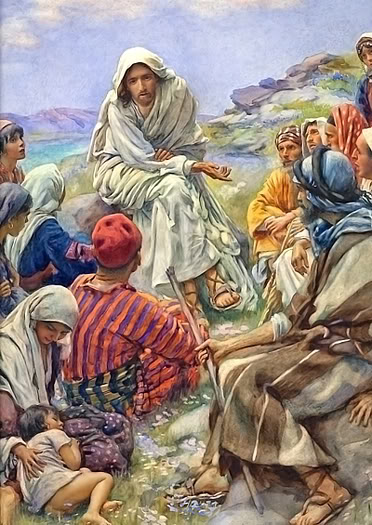
Do you remember the lady in the park who was upset with us for preaching the word of God?  She thought we should only be handing out cups of tea & doing *something useful* as she put it because that is what she believed the church should do. There is a time & a place for cups of tea, soup kitchens, homeless housing but those things were never meant to be the church's first priority.  Her first priority is to love God. This is what Jesus taught.  None of the rest matters if we get this first principle wrong. This is where Jesus began when He sat down on the mountainside & began to teach. This, according to both Old & New Testament, is the 1st & greatest commandment.


The Jewish people were given the Torah to help them build a relationship with God but because they never understood the heart they bogged an entire people down in rules & regulations that became an intolerable burden as Jesus pointed out: Woe to you as well, experts in the law!” He replied. “You weigh men down with heavy burdens, but you yourselves will not lift a finger to lighten their load." Luke 11:46 


They were pedantic about tithing, even to the smallest of herbs: 

Woe to you, scribes and Pharisees, you hypocrites! You pay tithes of mint, dill, and cumin, but you have disregarded the weightier matters of the Law: justice, mercy, and faithfulness. You should have practiced the latter, without neglecting the former. Matthew 23:23

Happiness is so desired that the Americans inscribed it in their Declaration of IndependenceWe hold these truths to be sacred & undeniable; that all men are created equal & independent, that from that equal creation they derive rights inherent & inalienable, among which are the preservation of life, & liberty, & the pursuit of happiness; ... 


There was a schism between what God meant when He gave Moses the Torah & how the Jewish people came to understand the Torah. It is this discrepancy Jesus addresses on the Mount & he begins by addressing this deep desire in the human heart for happiness. Blessed...in the Greek makarios which means * happy *. It can also mean someone who receives divine favour ~ which is how we usually define the grace of God: His unmerited favour towards us.  We looked at the Hebrew meaning of bless when we looked @ the Aaronic Blessing in Numbers: Barak ~ to kneel.  Now remember Hebrew is both concrete & pictorial so the meaning is to kneel with respect while bringing a gift to another.

In effect Jesus is saying: This is how the Grace of God works... Don't misunderstand me.  This is not a salvation issue.  You can be saved & redeemed of the Lord without ever once applying any of the beatitudes to your life but if you want to truly experience happiness & fulfillment & all God has for you then : Your ears will hear a word behind you, "This is the way, walk in it," whenever you turn to the right or to the left. Isaiah 30:21

Grace, like salvation, is a free gift just because God loves us so much but just like any other gift it doesn't do anything for us if we never unwrap it, never take it out of it's box & use it.  Here is the thing, & our churches have suffered from it for centuries: the church was never meant to be a weak, passive, meek [in our English sense of the word] entity.  It was meant to be robust, pro~active, assertive: know the word; speak the word; apply the word! 

It starts here with Jesus first teaching: Happy...Happy are those who bring this gift of poverty of spirit & lay it @ the Father's feet. Paul learnt this for he says of Christ in 2 Corinthians 12:9 ...My power works best in weakness... When we are working from our place of strength we leave no room for the Holy Spirit to work in us but when we come to the end of us, then Jesus can begin to work!  This is exactly what Jesus means for the Greek,  ptōchos, means
reduced to beggary, mendicant; poor, indigent, destitute. The picture is of someone who has lost absolutely everything, is homeless & reduced to begging in the streets.  

In our humanity we often admire people who *pull themselves up by their own bootstraps* & *Get their act together*  but the bible says the exact opposite: Every good thing given and every perfect gift is from above, coming down from the Father of lights, with whom there is no variation or shifting shadow. James 1:17 A man can receive only what is given him from heaven...John 3:27 ...He causes His sun to rise on the evil and the good, and sends rain on the righteous and the unrighteous...Matthew 5:45 Or as Luke points out in Acts 17:28 ...for in him we live, and move, and have our being...

When we begin to understand that everything we are, everything we have, is freely given out of the love & mercy & grace of God we have begun to position ourselves where we can receive the fullness of His blessing, the abundant life that Jesus promises.

Now when we teach on grace we generally point out 2 things: the unmerited favour of God wherein there is nothing we can do to earn God's favour, nothing we can do to lose it, & our legal position before God as opposed to our experiential position. What we need to understand is the tension between these 2 opposing positions.  When we understand the divide between our legal position & our experiential position we will seek to realign ourselves to receive  more of God's grace ~ the blessing.  

We need the grace of God to even begin to see how truly poverty stricken we are. In our arrogance we are like the  Laodicean church saying: Because you say, "I am rich, and have become wealthy, and have need of nothing," and you do not know that you are wretched and miserable and poor and blind and naked... [Revelation 3:17] We think because we have experienced something of God we are rich when in truth we've barely dipped our little toe in the waters of God's goodness, grace, mercy, power, majesty... There is so much more available to us.  And because of who God is there is always gong  to be more & more of Him to know, to experience, to enjoy.  It is a relationship of such incredible depth & expanse we can never come to the end of it. 

The irony is we can bend all of our willpower, all of our intellect, to cultivating  poverty of spirit & none of it will make the least difference to our heart's condition!  We desperately need the Holy Spirit's help to take even this first step in our relationship with God.  It is always God who initiates.  The response is up to us. You will seek Me and find Me when you search for Me with all your heart. Jeremiah 29:13  but it is clear from Jeremiah 24:7 that we cannot achieve this seeking & finding by our own efforts for God says: I will give them a heart to know Me, that I am the LORD. They will be My people, and I will be their God, for they will return to Me with all their heart.

It is God who gives us the new heart.  It is God who places the desire for greater intimacy within us.  It is God who initiates the changes within us that will draw us closer to Himself.  All is already freely available but we need to learn how to access all that has already been given.  It's a bit like fishing. All the fish in the sea are ours to catch but until we actually bait our line & caste it into the water we have no hope of catching even one little tiddler.

So we bait our hook & we caste it into the waters saying: God, I want more of you.  I want to experience more of you.  I want to understand how much I lack in order that you can fill me with more of yourself.  I want to know you more.  Show me your glory.  Show me your majesty.  Show me your power.

This was Moses cry:  Show me your glory. [Exodus 33:18] The people drew back, you remember, but Moses pressed in to God.

This was David's cry: Make Your face shine upon Your servant, And teach me Your statutes [Psalm 119:135]

God is always seeking more of us, a deeper, more intimate relationship.  It is we who limit that intimacy .  We fail to set aside time.  We fail to seek Him in prayer.  We neglect our almsgiving, our fasting, our serving in the daily press of making ends meet & running our lives whereas if we would just put God first, not just nominally but as our greatest priority, all the rest would fall into place. You see, we must respond.  We can see our lack & not do anything, be totally passive ~ & nothing will change. Or maybe we don't see our lack; that is pride & nothing will change.  But when we see our lack & respond, that is where God will meet us & supply our need.

Of all the beatitudes poverty of spirit is the hardest to maintain.  We see a little progress & it is so much more than we imagined we sit back on our laurels.  Or something happens in our life that sends us spiralling out of control & all our energy becomes focused on that one thing, pushing aside our sense of urgency about pressing in to God. But here is the interesting thing: each of the beatitudes has a promise attached. If you mourn, you will be comforted.  If you hunger & thirst, you will be filled. The meek will inherit the earth. They are all future promises but this first one & the last 2 ~ those are promises for now!  The Kingdom  IS theirs.  That is present tense.  Their reward IS great.  Present tense. 

When you walk in poverty of Spirit you are living in the Kingdom NOW!  When we pray, thy will be done on earth as it is in heaven, when we pray Thy kingdom come...we are meant to be helping that happen because we walk according to the Spirit of God, because we obey His precepts as the angels in Heaven do, because we are living out Kingdom precepts in the here & now with pureness of heart, poverty of Spirit, mercy, righteousness, meekness & peace.

Throughout scripture we find this continuous tension. There is grace, & there is legalism.  There is Spirit & there is Truth.  There is the least who are great & the great who are least. There is the servant King, the living sacrifice, the dead who live.  We were created for relationship.  Everything in scripture is designed to elicit a response from us, to move us positionally into relationship with God.  He has initiated, but it is up to us to respond. It is in our best interests to respond because there is no true happiness outside of happiness in God. In Hs grace & mercy He shows us how to achieve that.